Last night my father had a going-away party for me. There was pot roast and corn, several bottles of wine from my favorite winery. My father's fiancee came over, and so did her extremely hot son and his very skinny, very tan, very perky girlfriend. My grandmother came, and her husband--the farmer she married after my grandfather died--came late because he'd been delivering bales of hay all day.
We ate, we passed out dessert and coffee, we chatted. Then my grandmother announced she wanted a copy of my book about Russia. I went to dig one up in my room, which, because of my scattered way of packing, looks like a tornado or some other weather disaster whipped through it. I found a copy, but when I brought it out, my father was showing off his copy and--to my dismay--a literary magazine that one of my stories recently appeared in. The story in this particular literary magazine is one of the Wily Republican stories. It's the one that features the cardboard cut-out of the George W. Bush that lived in the Wily's room. It's the one that required me to use one of my least favorite words--twat (eew)--in a list two of the characters were making. There's two sex scenes in the story, there's all sorts of swearing, there's all sorts of stuff that a grandmother does not need to read.
Not too long ago I wrote a post in which I appeared all brave and ready for my family members to read my work. My logic was if I could survive my mother's reading of my thesis--including a story which was loosely based on our relationship post-my parents' divorce--then I could survive anything. Back when I wrote that post I was working on a story that was inspired by Christmas parties at my grandmother's house, and I said I wouldn't even mind if she read it. I was ready. Bring it on! I thought. I was sure I could handle it.
I was wrong, wrong, wrong.
I am a pussy.
If I cringed when my father forked over a story that used the word twat and had sex scenes that featured the ever-popular hoist method, I'm pretty sure that means I won't be ready for grandma to read a story that features a grandmother and three close-in-age granddaughters who might resemble my own grandmother and her three close-in-age granddaughters.
I don't know what happened to me in that moment when my father slid the magazine toward my grandmother. I lost it. I froze. My entire insides turned cold. In my head, I saw the word TWAT!!! in giant letters on the page. I couldn't get over the fact that my grandmother was sitting across from me and undergoing a revelation that I am a foul, sicko pervert who cusses like a sailor. Then I remembered the rest of the story: the sex, the expletives, the blatant mocking of a political party that my grandmother and her husband no doubt associate with.
I glared at my father. I tried to send him a Look. I tried to say, Rip that from her hands! I tried to say, Are you crazy? I tried to say, Do you want to be written out of the will because the fruit of your loins writes pornography?
He finally got the hint. "I think," he said, "Jess might be nervous about what you're reading."
Yeah, that helped.
I stood up. "I'm going to go into my room for a second and try not to throw up," I said.
My father followed me into my bedroom. "What?" he said. "Come on. Who are you kidding? Your grandmother loves this."
I wanted to tell him no, my grandmother wouldn't love that. I'd put money on the fact that she'd love me to write little stories that could someday be made into Hallmark Channel movies. I'd bet a lot of my savings that she wouldn't be psyched that her granddaughter was writing lines about it feeling pretty good to be slammed up against a wall during sex. I was pretty sure my father wouldn't like it either, but he hasn't really finished anything I've written. He tries hard, sure, but he is easily distracted and often has to put the book down before he's made it to the real offensive stuff. He's been trying to read the Wily-based story since last August when I came home.
"Dad!" I said. "I use the word twat in that story! TWAT! And there's sex in it!"
"Your grandmother is a woman," he said, as if that made it somehow okay.
"She's seventy-eight!" I said. In my experience, seventy-eight year olds are fans of the Chicken Soup books or Anne Geddes, not the f-bomb and out-of-wedlock lovemaking.
Eventually I went back out to the kitchen, and my grandmother was still there, busily reading my story. She was even laughing. I wasn't exactly sure what she might be laughing at, so I wracked my brain to think if there were non-disgusting funny parts in that story. But I didn't have to think about it long because my grandmother explained what she was laughing at.
"This is funny," she said. She giggled. "She puts her bra on the cardboard cut-out of the president. Ha!"
"Oh," I said, "yeah. The main character certainly does do that, doesn't she?"
Well, really, the main character puts her underthings on the cardboard George W. whenever she is having sex with her boyfriend--she doesn't like the way George's eyes follow her if left uncovered.
And my grandmother read that. It made me want to poke my eyes out with a stick. Of course, she thought it was funny, and funny enough to mention out loud, and funny enough to make her giggle as she was sitting next to her almost-deaf, hay-baling husband who would punctuate the silence every few minutes by talking about corn, manure, or the air conditioning unit in his tractor.
So maybe it wasn't quite the disaster it could have been, and maybe I was being overly sensitive while I worried over my grandmother's reading of that story, but I think I've learned a very important lesson: I'm not exactly ready for some stories to make the family rounds. A nonfiction book about Russia is one thing. I'll gladly autograph it, and I'll gladly discuss reading and sifting through the research so I could write that book, but I don't think I'm quite ready to sit in front of my family members as they leaf through my collection of stories and come across dirty words and dirty scenes. I'll get on a stage and read those things out loud to strangers--hey, that's no problem--but I don't want to sit in a very small kitchen and watch my grandmother's eyes scan the page, drinking it all in. There wasn't enough wine in the room to prepare me for that. Not even close.
Showing posts with label writing. Show all posts
Showing posts with label writing. Show all posts
Thursday, August 16, 2007


Monday, July 09, 2007
Strange Inspiration
Stories are strange, the way they come about. I've been inspired to write stories based on people I love, on diseases I've heard about, on scars, on titles that came first.
Just recently I had to put aside a story I've been fighting with for months--I've rewritten the opening pages at least five times--because something new came up. Something better. And this something better came from a strange, strange place.
A part of it came from a piece of graffiti I see every time I drive home from Buffalo. It's the word seven and a picture of a heart. Seven love. I don't know why I love the sound of that phrase so much, but I do.
But it's more than the phrase that gets me. There's something else going on at that certain stretch of highway. A little ways down the road from the exit sign that has been spray painted with seven love is a plastic flamingo--you know, the lawn decoration type. Well, it used to be a flamingo, singular, but now there is a growing flamingo family. The first one sat up there--high on the banking, nestled next to a tree--for months. It made me wonder if the person responsible for seven love was responsible for the flamingo, too, and all the other flamingos that came next. About a month after the first arrived, another lawn decoration surfaced on the hill. And then another. I'm sure it's only a matter of time until a fourth surfaces, expands the family.
But just who does that? Just who takes the time and makes the effort to sneak up the hill on the side of a highway to plant plastic flamingos there? What kind of motivation prompts that action? Thinking about these questions got me thinking about other questions: was anyone going to ever get rid of the graffiti, of the flamingo family? Whose job was that? Who was responsible for driving up and down the roads of western New York, taking stock of the things that weren't supposed to be there? I figured it was someone in the Department of Transportation, probably the same type of guy who was responsible for getting rid of the dead animals that get kicked to the side of the road.
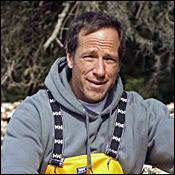
I had all of that in my head for a few weeks, and then one night I was watching Dirty Jobs, because there's nothing I like more than Mike Rowe getting suckered into artificially inseminating horses or catching river snakes or rounding up ostriches or collecting owl poop. And on this particular night, there was Mike, standing on the side of the road with a big shovel, ready to heft a mangled deer into the back of a DOT pickup truck. After Mike and the DOT guy filled the truck with as many dead things they could find, they took those carcasses to a big mulch yard, where they buried them under tall hills of sawdust. They would break down under the sawdust. They would become mulch. They would become part of some unsuspecting gardener's daily routine.
And that was enough for me. It felt like divine intervention that I'd seen that particular segment, that I now knew a little bit more about that job and about the type of person who held it, and I wanted to write it. I wanted to write about a guy whose job it was to make things a little more beautiful, who had to clean up the things that reminded people things weren't always beautiful--graffiti, dead animals--and I wanted to have him taunted, tortured by whoever was being so insistent about leaving strange messages on the local exit signs. I wanted him to obsess over it while he was picking up dead deer, dead possums, dead raccoons, dead foxes. I wanted him to try to figure it out, try to imagine who would do such a thing. Really, I wanted him to do what I was doing every day I drove past those things. And I wanted him to figure it out, to get some answers. Because I know I never will.
Just recently I had to put aside a story I've been fighting with for months--I've rewritten the opening pages at least five times--because something new came up. Something better. And this something better came from a strange, strange place.
A part of it came from a piece of graffiti I see every time I drive home from Buffalo. It's the word seven and a picture of a heart. Seven love. I don't know why I love the sound of that phrase so much, but I do.
But it's more than the phrase that gets me. There's something else going on at that certain stretch of highway. A little ways down the road from the exit sign that has been spray painted with seven love is a plastic flamingo--you know, the lawn decoration type. Well, it used to be a flamingo, singular, but now there is a growing flamingo family. The first one sat up there--high on the banking, nestled next to a tree--for months. It made me wonder if the person responsible for seven love was responsible for the flamingo, too, and all the other flamingos that came next. About a month after the first arrived, another lawn decoration surfaced on the hill. And then another. I'm sure it's only a matter of time until a fourth surfaces, expands the family.
But just who does that? Just who takes the time and makes the effort to sneak up the hill on the side of a highway to plant plastic flamingos there? What kind of motivation prompts that action? Thinking about these questions got me thinking about other questions: was anyone going to ever get rid of the graffiti, of the flamingo family? Whose job was that? Who was responsible for driving up and down the roads of western New York, taking stock of the things that weren't supposed to be there? I figured it was someone in the Department of Transportation, probably the same type of guy who was responsible for getting rid of the dead animals that get kicked to the side of the road.
I had all of that in my head for a few weeks, and then one night I was watching Dirty Jobs, because there's nothing I like more than Mike Rowe getting suckered into artificially inseminating horses or catching river snakes or rounding up ostriches or collecting owl poop. And on this particular night, there was Mike, standing on the side of the road with a big shovel, ready to heft a mangled deer into the back of a DOT pickup truck. After Mike and the DOT guy filled the truck with as many dead things they could find, they took those carcasses to a big mulch yard, where they buried them under tall hills of sawdust. They would break down under the sawdust. They would become mulch. They would become part of some unsuspecting gardener's daily routine.
And that was enough for me. It felt like divine intervention that I'd seen that particular segment, that I now knew a little bit more about that job and about the type of person who held it, and I wanted to write it. I wanted to write about a guy whose job it was to make things a little more beautiful, who had to clean up the things that reminded people things weren't always beautiful--graffiti, dead animals--and I wanted to have him taunted, tortured by whoever was being so insistent about leaving strange messages on the local exit signs. I wanted him to obsess over it while he was picking up dead deer, dead possums, dead raccoons, dead foxes. I wanted him to try to figure it out, try to imagine who would do such a thing. Really, I wanted him to do what I was doing every day I drove past those things. And I wanted him to figure it out, to get some answers. Because I know I never will.
Wednesday, June 20, 2007
Two Weeks
Today marks two weeks since I started waitressing again. In those two weeks, I've remembered one very important thing about working this kind of job: it's way easier to make friends with the boys than it is the girls.
The boys at work are very sweet to me. They leave flowers on my car, they buy me dinner, they bring bottles of my favorite pop to work, they ask for and then read my thesis and book about Russia. They want to discuss my stories and characters. They say, "I don't think the character in this story is as bad as he thinks he is." They ask, "What are you writing now?" And when I tell them I'm writing a story about a brother and sister, a story where the brother has always been so good and perfect and then something happens to change him, to make him an awful man, that's when the boys at work want to know if they can help, if they can illustrate the story for me:

Caption: You stupid bitch!
I tell them we're going to make a very good team.
The boys at work are very sweet to me. They leave flowers on my car, they buy me dinner, they bring bottles of my favorite pop to work, they ask for and then read my thesis and book about Russia. They want to discuss my stories and characters. They say, "I don't think the character in this story is as bad as he thinks he is." They ask, "What are you writing now?" And when I tell them I'm writing a story about a brother and sister, a story where the brother has always been so good and perfect and then something happens to change him, to make him an awful man, that's when the boys at work want to know if they can help, if they can illustrate the story for me:
Caption: You stupid bitch!
I tell them we're going to make a very good team.
Thursday, April 19, 2007
Further Proof That He's Literary
When I got the news yesterday that my latest story was going to be published I couldn't help but thinking, Huh. That's interesting.
I thought it was interesting because it's one of those stories that was fueled by the Wily Republican--things he did, things he said, things he was. I wrote the story the week after I moved away from Minnesota and back to New York. It wasn't the greatest week I ever had, and it's important to remember that I spent most of that week pantsless and wandering around my childhood home thinking Oh my God oh my God oh my God. My mood was foul. My hygiene was questionable. My head was a mess. And when I sat down in front of the computer all I could think about was what I'd left behind, and the Wily Republican was one of those things.
While he was in college, the Wily worked at the nearby psychiatric treatment center, where the state threw the most despicable people it could dig up. He told me so many stories. There was a man who committed a string of rapes by first hitting women joggers with his car, knocking them down, taking away their only means of escape--their fast legs--and then he would get out, drag them off the beaten path and finish what he'd come to do. Another man was locked away because he'd kept his wife locked in a closet for days without food and water. Shortly after his arrival at the treatment center, he was beaten within an inch of his life by someone who had fashioned a heavy whip out of an old sock stuffed with batteries.
The Wily often looked tired when he told me these stories, and I wasn't sure how he--or anyone--did it, how they kept going back to a place like that without snapping, without taking these people up in their own hands and taking them apart little by little. Snapping bones, tearing out hair, snipping off fingertips.
So I wrote that. I wrote all of that. And I made the main character fall in love, a hard love that, when held up next to his life and work, made the people he watched over seem even more repulsive than they already were.
I like the story quite a bit, so I was happy to see it get picked up--especially because it got picked up by the first place I sent it to, and that's something that hasn't happened to me before. But what was more interesting to me was this: that's the second Wily Republican piece to go. Sometimes I think he and I lived our strange intersecting lives for three years just so he could feed me inspiration, just so we could run around town and do strange things that would eventually turn up in my writing. Sometimes I think the WR is a lucky charm. Sometimes I think that's worth all the times he made me cry, all the ways he made me crazy.
In the story that just got taken, there's a line the main character thinks the first time he sees his to-be-wife. He's looking and looking and looking at her. He can't stop. He doesn't know what it is exactly, but there's just something about her that takes away his ability to talk, breathe, move. He keeps on staring and thinks, Now that's someone worth knowing. That's one of my favorite lines of the story, mostly because I like to think that's what the Wily thought when he was first getting to know me. That he was watching me be quirky-strange-bumbling me and thinking, This is someone I'd like to know for a long time. I like to think this because I know that during those first few months we knew each other I kept looking at him and listening to him tell his stories, and I couldn't help thinking with almost complete certainty that this was going to be trouble, trouble, trouble, but I was going to go along with it anyway because it felt like it was going to be really good, really worth it, one of those things that would change the way I looked at the world.
I thought it was interesting because it's one of those stories that was fueled by the Wily Republican--things he did, things he said, things he was. I wrote the story the week after I moved away from Minnesota and back to New York. It wasn't the greatest week I ever had, and it's important to remember that I spent most of that week pantsless and wandering around my childhood home thinking Oh my God oh my God oh my God. My mood was foul. My hygiene was questionable. My head was a mess. And when I sat down in front of the computer all I could think about was what I'd left behind, and the Wily Republican was one of those things.
While he was in college, the Wily worked at the nearby psychiatric treatment center, where the state threw the most despicable people it could dig up. He told me so many stories. There was a man who committed a string of rapes by first hitting women joggers with his car, knocking them down, taking away their only means of escape--their fast legs--and then he would get out, drag them off the beaten path and finish what he'd come to do. Another man was locked away because he'd kept his wife locked in a closet for days without food and water. Shortly after his arrival at the treatment center, he was beaten within an inch of his life by someone who had fashioned a heavy whip out of an old sock stuffed with batteries.
The Wily often looked tired when he told me these stories, and I wasn't sure how he--or anyone--did it, how they kept going back to a place like that without snapping, without taking these people up in their own hands and taking them apart little by little. Snapping bones, tearing out hair, snipping off fingertips.
So I wrote that. I wrote all of that. And I made the main character fall in love, a hard love that, when held up next to his life and work, made the people he watched over seem even more repulsive than they already were.
I like the story quite a bit, so I was happy to see it get picked up--especially because it got picked up by the first place I sent it to, and that's something that hasn't happened to me before. But what was more interesting to me was this: that's the second Wily Republican piece to go. Sometimes I think he and I lived our strange intersecting lives for three years just so he could feed me inspiration, just so we could run around town and do strange things that would eventually turn up in my writing. Sometimes I think the WR is a lucky charm. Sometimes I think that's worth all the times he made me cry, all the ways he made me crazy.
In the story that just got taken, there's a line the main character thinks the first time he sees his to-be-wife. He's looking and looking and looking at her. He can't stop. He doesn't know what it is exactly, but there's just something about her that takes away his ability to talk, breathe, move. He keeps on staring and thinks, Now that's someone worth knowing. That's one of my favorite lines of the story, mostly because I like to think that's what the Wily thought when he was first getting to know me. That he was watching me be quirky-strange-bumbling me and thinking, This is someone I'd like to know for a long time. I like to think this because I know that during those first few months we knew each other I kept looking at him and listening to him tell his stories, and I couldn't help thinking with almost complete certainty that this was going to be trouble, trouble, trouble, but I was going to go along with it anyway because it felt like it was going to be really good, really worth it, one of those things that would change the way I looked at the world.
Wednesday, April 18, 2007
Best. Day. Ever.
I'll tell you this: it hasn't been easy lately. I'm starting to come to grips with the fact that I am not going to land any of the fifty full-time teaching gigs I applied for this year. I'm starting to realize that, for better or worse, I am probably going to be in Buffalo for another year. Still, I remain thankful for what I've been given: more time with my family and oldest friends.
But it's been hard. It's been hard to go to the mailbox every single day and see more rejection letters from colleges that stretch from New Hampshire to Oregon. We don't want you, they say. Are you kidding, they say. Better luck next year, they say.
It's been a similarly taxing battle for publication lately. My stories--even the one I love and believe in more than anything--have bounced back to me. Rejections have sprinkled in from all my favorite literary magazines. Not right, they say. We loved almost all of it, they say. Try us again, they say.
My mailbox has been stuffed full of no, no, no, no, no. It's been like this for months. And it was starting to grate on my insides, scrub me raw.
But then this morning I woke up in a beautiful mood. There was some song on the radio--some song I'd never heard before--and it was just the right song to wake up to. I wanted to sing in the shower. I wanted to pull out some of my best dance moves as I was pouring cereal. I wanted to splash through leftover puddles on my walk into school this morning. Everything felt good.
It was just one of those days, filled with these and other beautiful things:
1. I got a standing ovation in my last class of the afternoon.
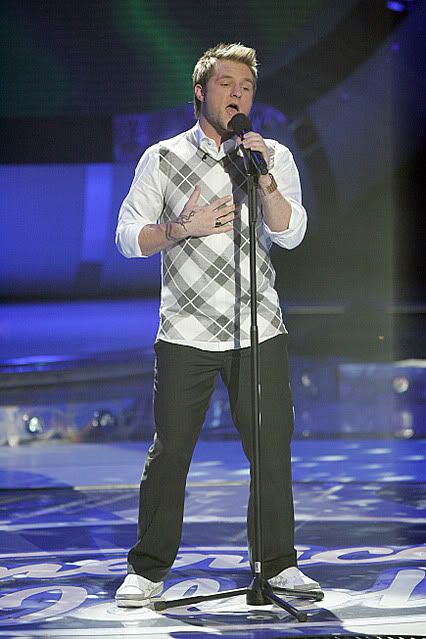
2. My boy Blake--my favorite American Idol contestant, the boy who, yesterday, inspired me to shriek (in front of my father nonetheless) I want to bite his stomach!--was sent safely back to the couch and Sanjaya was kicked off the show. Later, Katy would call me to declare victory and say, "The world is now right!" and yes, yes, I had to agree. It was. Now I will no longer have to worry about writing her a five paragraph rant on Wednesday mornings that discusses how much I am bothered by Sangina, which is what I took to calling him weeks ago. (When I said Sangina in front of my mother, she turned to me and said, very seriously, "Jess, that's not his name." And I had to say, "I know, mother. I'm combining words here." And there was a pause and a smile as it slowly dawned on her. "Oh," she said. "Ohhhhh. I like it!")
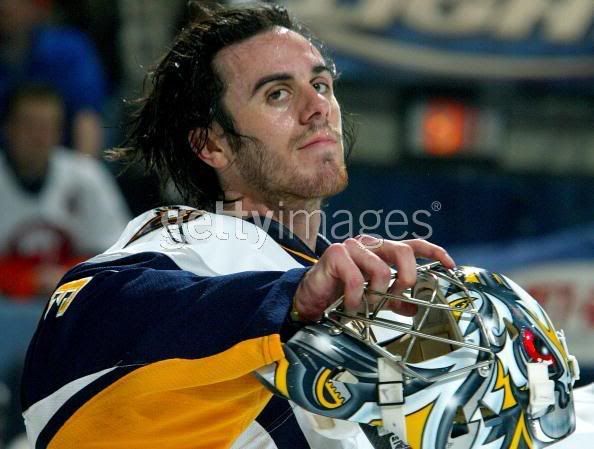
3. The Sabres won Game Four. Let's take a moment to meditate on the beauty of this statement.
4. And here's the crowning moment of it all: all the ugly no-no-no was finally replaced by one yes--a yes that made me drive to the liquor store in search of a bottle of champagne because why shouldn't one celebrate success on a Wednesday night? One of my stories was just picked up by the Berkeley Fiction Review. The edition should be out in a few weeks.
But it's been hard. It's been hard to go to the mailbox every single day and see more rejection letters from colleges that stretch from New Hampshire to Oregon. We don't want you, they say. Are you kidding, they say. Better luck next year, they say.
It's been a similarly taxing battle for publication lately. My stories--even the one I love and believe in more than anything--have bounced back to me. Rejections have sprinkled in from all my favorite literary magazines. Not right, they say. We loved almost all of it, they say. Try us again, they say.
My mailbox has been stuffed full of no, no, no, no, no. It's been like this for months. And it was starting to grate on my insides, scrub me raw.
But then this morning I woke up in a beautiful mood. There was some song on the radio--some song I'd never heard before--and it was just the right song to wake up to. I wanted to sing in the shower. I wanted to pull out some of my best dance moves as I was pouring cereal. I wanted to splash through leftover puddles on my walk into school this morning. Everything felt good.
It was just one of those days, filled with these and other beautiful things:
1. I got a standing ovation in my last class of the afternoon.
2. My boy Blake--my favorite American Idol contestant, the boy who, yesterday, inspired me to shriek (in front of my father nonetheless) I want to bite his stomach!--was sent safely back to the couch and Sanjaya was kicked off the show. Later, Katy would call me to declare victory and say, "The world is now right!" and yes, yes, I had to agree. It was. Now I will no longer have to worry about writing her a five paragraph rant on Wednesday mornings that discusses how much I am bothered by Sangina, which is what I took to calling him weeks ago. (When I said Sangina in front of my mother, she turned to me and said, very seriously, "Jess, that's not his name." And I had to say, "I know, mother. I'm combining words here." And there was a pause and a smile as it slowly dawned on her. "Oh," she said. "Ohhhhh. I like it!")
3. The Sabres won Game Four. Let's take a moment to meditate on the beauty of this statement.
4. And here's the crowning moment of it all: all the ugly no-no-no was finally replaced by one yes--a yes that made me drive to the liquor store in search of a bottle of champagne because why shouldn't one celebrate success on a Wednesday night? One of my stories was just picked up by the Berkeley Fiction Review. The edition should be out in a few weeks.
Monday, April 09, 2007
Seventy-Eight Words
Tonight I accidentally lit my hair on fire with a candle.
Tonight I ate the following: a pound of rice crackers, three milk chocolate eggs, three Brach's Fiesta Malted Eggs, two mini Snickers, a slice of sour cream coffee cake. (All of this after my dinner.)
Tonight I played two hours of The Sims 2.
Tonight I learned that The Black Donnelly's has been canceled, which means my love affair with Jonathan Tucker and the way he hardly moves his mouth when he talks will have to end. Now Mondays will cease being The Day I Spend Considerable Time Wishing I Could Put My Hands in His Hair.
Tonight I spent my time consumed with all of these things for one specific reason: I couldn't write. And I tried every trick in the book to break out of the block. I played some Martin Sexton, ate some chocolate, lit some candles. That got me seventy-eight words. Seventy-eight words that aren't good, that sound crappy, that led nowhere, that made me pace, that made me put my head down, that made me eat too much and think too much and obsess too much.
I need to snap out of it.
Tonight I ate the following: a pound of rice crackers, three milk chocolate eggs, three Brach's Fiesta Malted Eggs, two mini Snickers, a slice of sour cream coffee cake. (All of this after my dinner.)
Tonight I played two hours of The Sims 2.
Tonight I learned that The Black Donnelly's has been canceled, which means my love affair with Jonathan Tucker and the way he hardly moves his mouth when he talks will have to end. Now Mondays will cease being The Day I Spend Considerable Time Wishing I Could Put My Hands in His Hair.
Tonight I spent my time consumed with all of these things for one specific reason: I couldn't write. And I tried every trick in the book to break out of the block. I played some Martin Sexton, ate some chocolate, lit some candles. That got me seventy-eight words. Seventy-eight words that aren't good, that sound crappy, that led nowhere, that made me pace, that made me put my head down, that made me eat too much and think too much and obsess too much.
I need to snap out of it.
Monday, February 19, 2007
The Man I Will Never Get Over
I have a lot of bad habits (ignoring dishes, not filing important papers, losing my mind when boys mimic me in those high-pitched screechy voices they always do when imitating women), but another is this: I have a bad habit of falling in love with some (a lot) of the male characters I write.
This isn't love in that creepy I've-lost-sense-of-reality kind of way where I carry on conversations with the characters in my head, where I think they're somehow going to materialize in my living room and say, "Come on, Jess, we're going out for a nice steak dinner." I have a grip. I have control. I also have my sanity. My love for these characters is hypothetical. It's a love that says, If these characters were real men in your life, you wouldn't stand a chance. Not a single chance.
This weekend I started writing a new story with a whole new boy that I first thought was going to be one way--disgusting, foul, and shady--but turned out much different than all that. Suddenly there was a scene that showed him as vulnerable, damaged, and even noble. The whole story changed. The whole story got better. And I was in love.
I think that's how I like my men: with bite and bent and attitude. I like my men to come from bad places so they appreciate what they have, so they will fight if anyone ever tries to take it away from them. And so that's who often shows up--whether I want them to or not--in stories I write.
But no one ever showed up more than Oliver Covet. I will never be able to stop thinking about Oliver Covet: tall, blond, perfect hair, worked-in jeans, a hammer in his hand.
Ollie came around when I was twelve years old. He just showed up because I had started writing a story about the girl I always wanted to be: the daughter of a racing tycoon. My childhood had been soaked in the boozy-smokey world of auto racing. My mother owned a NASCAR memorabilia store, my father took me to the local track on Saturday nights, and my best friend's father had a race team of his own. I once stood in their garage and helped to rub the lettering of the driver's name on the car's roof. I wished and wished and wished that the name could be my name on my own car that I would get into on Saturday, a car I would drive hard and bang up and win with.
I never would get it, and I knew it, so I wrote about it instead. I created my perfect world. I created a prissy mother who was depressed her daughter was a tomboy, a father who was pleased about it, and a raggedy crew of attractive boys who fixed the car. I created a better version of me. I created Jessie Roberts: smartassed, tough, sarcastic, beautiful, worshipped, uncontainable. Then I created the world's best man to head up the crew of attractive boys. I created Ollie: tall, with long blond hair and blue eyes, the only boy who knew how to reign in Jessie Roberts, the only boy who ever saw her cry.
I could go on about Ollie Covet for hours, days, weeks, months. It's a strange combination: I feel proud because he's mine, I created him, and I put him together with my own two hands; I also feel like I wish he would materialize out of the thin air and tell me we're going out for a nice steak dinner, then we're going shopping for wedding rings. I'd marry Ollie Covet in a New York minute. In a hot, hot second.
I thought about Ollie Covet a lot over the last few days. For one thing, I spent half my day on Sunday in front of the television, watching the Daytona 500. For another thing, Diana sent me an e-mail this morning about the newest onslaught of Harlequin books--they'll feature racing themes and "appearances" from real-life drivers. It made me angry to think of that. I wanted to yell at the authors of those books, to tell them they couldn't possibly be accurately portraying what it's like to love the institution of auto racing, to love its roots and legacy, to love the boys who slip themselves into those tenuous sheet metal shells week after week. The Harlequin stories, I was sure, would be goofy and gross. They would feature silly, giggly, wormy girls who would know nothing about racing yet they would end up bagging the hottest racer around. They would say, "I just don't get what you do! Will you explain it to me again?" Jessie Roberts would never be a silly, giggly, wormy girl. She wouldn't stand for anything like that. Her story would be so much more compelling, so much more real.
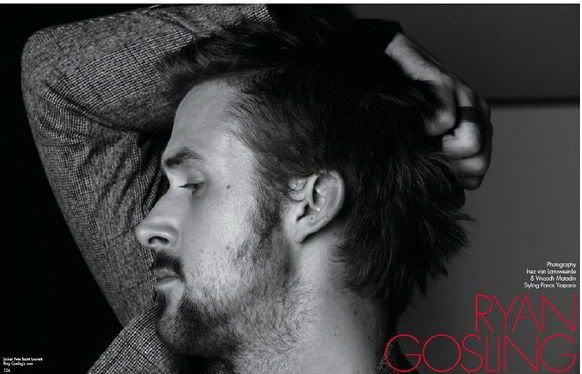
Both of those things worked me into an Ollie overload, but one more thing threw me right over the edge. This weekend Amy and I, in our quest to see as many Oscar-nominated films and performances as possible before the ceremony--watched Half Nelson. In it, Ryan Gosling is scruffy and lost and vulnerable. He is beautiful, one of the world's most beautiful boys. And that's when I realized it. He could be Ollie. He could be Ollie with no problem, with very little effort. I'd never been able to pin that down before. I'd never been able to say, "Oh, in a perfect world where they turned this story into a movie, so-and-so would play Ollie." I thought a younger Matthew McConaughey might've been able to pull it off, but that line of thinking was never quite right. Ollie would be a little grittier, a little tougher, a little less perfect.
So this weekend when I looked at the screen I saw, for the first time ever, Ollie Covet looking back at me. And I thought Oh God and Wouldn't it be nice and Jesus. I thought it was perfect, that Ryan Gosling's body and face could be Ollie's body and face, and if we could just scoop up all the words and details and images I'd ever written about Ollie Covet then somehow pour them into Ryan Gosling--well, that would be it for me. That would be my man, my love, the one thing I would never quite stop thinking about.

This isn't love in that creepy I've-lost-sense-of-reality kind of way where I carry on conversations with the characters in my head, where I think they're somehow going to materialize in my living room and say, "Come on, Jess, we're going out for a nice steak dinner." I have a grip. I have control. I also have my sanity. My love for these characters is hypothetical. It's a love that says, If these characters were real men in your life, you wouldn't stand a chance. Not a single chance.
This weekend I started writing a new story with a whole new boy that I first thought was going to be one way--disgusting, foul, and shady--but turned out much different than all that. Suddenly there was a scene that showed him as vulnerable, damaged, and even noble. The whole story changed. The whole story got better. And I was in love.
I think that's how I like my men: with bite and bent and attitude. I like my men to come from bad places so they appreciate what they have, so they will fight if anyone ever tries to take it away from them. And so that's who often shows up--whether I want them to or not--in stories I write.
But no one ever showed up more than Oliver Covet. I will never be able to stop thinking about Oliver Covet: tall, blond, perfect hair, worked-in jeans, a hammer in his hand.
Ollie came around when I was twelve years old. He just showed up because I had started writing a story about the girl I always wanted to be: the daughter of a racing tycoon. My childhood had been soaked in the boozy-smokey world of auto racing. My mother owned a NASCAR memorabilia store, my father took me to the local track on Saturday nights, and my best friend's father had a race team of his own. I once stood in their garage and helped to rub the lettering of the driver's name on the car's roof. I wished and wished and wished that the name could be my name on my own car that I would get into on Saturday, a car I would drive hard and bang up and win with.
I never would get it, and I knew it, so I wrote about it instead. I created my perfect world. I created a prissy mother who was depressed her daughter was a tomboy, a father who was pleased about it, and a raggedy crew of attractive boys who fixed the car. I created a better version of me. I created Jessie Roberts: smartassed, tough, sarcastic, beautiful, worshipped, uncontainable. Then I created the world's best man to head up the crew of attractive boys. I created Ollie: tall, with long blond hair and blue eyes, the only boy who knew how to reign in Jessie Roberts, the only boy who ever saw her cry.
I could go on about Ollie Covet for hours, days, weeks, months. It's a strange combination: I feel proud because he's mine, I created him, and I put him together with my own two hands; I also feel like I wish he would materialize out of the thin air and tell me we're going out for a nice steak dinner, then we're going shopping for wedding rings. I'd marry Ollie Covet in a New York minute. In a hot, hot second.
I thought about Ollie Covet a lot over the last few days. For one thing, I spent half my day on Sunday in front of the television, watching the Daytona 500. For another thing, Diana sent me an e-mail this morning about the newest onslaught of Harlequin books--they'll feature racing themes and "appearances" from real-life drivers. It made me angry to think of that. I wanted to yell at the authors of those books, to tell them they couldn't possibly be accurately portraying what it's like to love the institution of auto racing, to love its roots and legacy, to love the boys who slip themselves into those tenuous sheet metal shells week after week. The Harlequin stories, I was sure, would be goofy and gross. They would feature silly, giggly, wormy girls who would know nothing about racing yet they would end up bagging the hottest racer around. They would say, "I just don't get what you do! Will you explain it to me again?" Jessie Roberts would never be a silly, giggly, wormy girl. She wouldn't stand for anything like that. Her story would be so much more compelling, so much more real.
Both of those things worked me into an Ollie overload, but one more thing threw me right over the edge. This weekend Amy and I, in our quest to see as many Oscar-nominated films and performances as possible before the ceremony--watched Half Nelson. In it, Ryan Gosling is scruffy and lost and vulnerable. He is beautiful, one of the world's most beautiful boys. And that's when I realized it. He could be Ollie. He could be Ollie with no problem, with very little effort. I'd never been able to pin that down before. I'd never been able to say, "Oh, in a perfect world where they turned this story into a movie, so-and-so would play Ollie." I thought a younger Matthew McConaughey might've been able to pull it off, but that line of thinking was never quite right. Ollie would be a little grittier, a little tougher, a little less perfect.
So this weekend when I looked at the screen I saw, for the first time ever, Ollie Covet looking back at me. And I thought Oh God and Wouldn't it be nice and Jesus. I thought it was perfect, that Ryan Gosling's body and face could be Ollie's body and face, and if we could just scoop up all the words and details and images I'd ever written about Ollie Covet then somehow pour them into Ryan Gosling--well, that would be it for me. That would be my man, my love, the one thing I would never quite stop thinking about.
Thursday, February 08, 2007
I Found It in My Entryway
A few copies of this showed up on my doorstep just the other day:

It's my book! I'm on Amazon.com! See?
It would make such an excellent gift for Valentine's Day--well, if you had a teenager who was interested in reading a book on Russian teen culture because they don't have a date for Valentine's Day. I can relate. I'll probably be sitting home reading on Valentine's Day, too. And if I hadn't written it and already read it a thousand times, I'd totally read this book. My favorite thing is the section about the Moscow Metro. It's just so stunning.
It's my book! I'm on Amazon.com! See?
It would make such an excellent gift for Valentine's Day--well, if you had a teenager who was interested in reading a book on Russian teen culture because they don't have a date for Valentine's Day. I can relate. I'll probably be sitting home reading on Valentine's Day, too. And if I hadn't written it and already read it a thousand times, I'd totally read this book. My favorite thing is the section about the Moscow Metro. It's just so stunning.
Wednesday, January 10, 2007
The Same Difference
When I was in grad school, the creative writing program often set up mini-conferences for its students when visiting writers swung into town for Good Thunder readings. I landed myself in a couple of these mini-conferences over the three years I was there, but there is only one that I will remember so clearly for the rest of my days. I won't name the author--that would just be catty and rude--but I will tell you the author was a he, a he who was full of swagger and bravado, so much so that being in his presence made me feel inferior because I am not a man, nor full of any swagger or bravado of my own.
Before the conference, I submitted one of my newest stories for this visiting author to read. At the time I was pretty proud of this story, which was about a girl who had a bad case of pica--a condition where a person eats dirt, stones, hair--anything considered nonnutritive. The girl enrolled in group therapy and met Adam, who was in for Depersonalization Disorder. He felt phantom limbs and was significantly detached from reality. I made the two of them fall in love and move in together, against doctor's orders.
I liked the two of them. They were quirky and weird. But that was also a problem. I was too wrapped up in quirky and weird to make them real. I realize that now, but back then I was still developing my sense of story. This was the last thing I wrote before I went through my big change, on the other side of which I was writing stories like mad, and all of them made it into my thesis. The story I submitted for this conference didn't make it anywhere near my thesis.
Still, it's not horrible. And the visiting author didn't think so either.
"You're going to be published soon," he told me after I settled into a chair opposite him.
I couldn't help myself--I beamed. That was good news, and I didn't mind hearing it out loud. But then I looked closely at the visiting author. He seemed to be frowning. He didn't seem particularly happy about what he'd just said.
"There's a market for writers like you," he said. He told me I was wrapped up in my pretty words and sentence structure. "This is poetic," he said, but when he said poetic his nose wrinkled.
I flipped open a notebook and started recording his criticisms. He didn't like the way my characters talked. He thought it was too clever. He got worked up about my writing T-shirt as t-shirt. "It's called a T-shirt because the shirt actually looks like an uppercase T," he said. He flapped his arms in the air, illustrating. "See? Not a lowercase t."
I opened my eyes wide and nodded, like I was amazed, like I'd never considered that before. "I see," I said.
"Where are you from?" he asked.
"New York," I said. That's a knee-jerk response. New York is a big state, and you'd think people wouldn't automatically assume you mean the city when you say New York, but they do.
"Yeah," he said. "That makes sense. You know what's irritating about writers like you?"
My gulp was probably audible. "What?" I asked.
"You have no sense of place. Your stories always default to New York City. You just assume that your readers have been there, know what it's like, and will automatically get that this story is taking place in the big city," he said.
"This story doesn't take place in New York," I said. In fact, half of it took place in the tropics, after the couple went on vacation. The rest of the story took place in the girl's house, which featured a giant deck and lawn. I haven't seen too many full size houses with decks and lawns in Manhattan. "Also, I'm from Buffalo. Not the city."
But the visiting author didn't seem too concerned with the giant difference between Buffalo and New York City. He waved his hand in the air and continued to page through my story. "Same difference," he said.
I stopped writing things down after that.
Still, every time I start a new story I can hear him in the back of my head. Place! he says. Place! But that's not me. Some authors are authors of place. I'm not. I like to think of myself as a writer of characters, someone who thinks the people she's writing about are the most important part of a story, not the population or demographics of where they're living. That's not to say there aren't times when the place becomes a character in a story, times when it plays a giant part in forming the characters of the story, but that rarely happens in my writing.
Of course, me thinking that doesn't always silence the visiting author's voice that squawks The trouble with writers like you is... during the writing or editing process. Still, I'm pretty good at flipping a switch and filtering all that stuff out. If I didn't, I feel like I'd be regressing in my writing style, and my stories would all begin the way they did when I was eleven years old:
Sandy and Ricky are best friends. Sandy lives in a white house with blue shutters. She has long brown hair. She is tall. Ricky lives in an old apartment with green wallpaper. He is short. They like to play Twister. Ricky likes Twinkies. Sandy likes grapes. They are ten years old. They go to school at Franklin McLean Middle School.
And who could read more than a paragraph of that?
Before the conference, I submitted one of my newest stories for this visiting author to read. At the time I was pretty proud of this story, which was about a girl who had a bad case of pica--a condition where a person eats dirt, stones, hair--anything considered nonnutritive. The girl enrolled in group therapy and met Adam, who was in for Depersonalization Disorder. He felt phantom limbs and was significantly detached from reality. I made the two of them fall in love and move in together, against doctor's orders.
I liked the two of them. They were quirky and weird. But that was also a problem. I was too wrapped up in quirky and weird to make them real. I realize that now, but back then I was still developing my sense of story. This was the last thing I wrote before I went through my big change, on the other side of which I was writing stories like mad, and all of them made it into my thesis. The story I submitted for this conference didn't make it anywhere near my thesis.
Still, it's not horrible. And the visiting author didn't think so either.
"You're going to be published soon," he told me after I settled into a chair opposite him.
I couldn't help myself--I beamed. That was good news, and I didn't mind hearing it out loud. But then I looked closely at the visiting author. He seemed to be frowning. He didn't seem particularly happy about what he'd just said.
"There's a market for writers like you," he said. He told me I was wrapped up in my pretty words and sentence structure. "This is poetic," he said, but when he said poetic his nose wrinkled.
I flipped open a notebook and started recording his criticisms. He didn't like the way my characters talked. He thought it was too clever. He got worked up about my writing T-shirt as t-shirt. "It's called a T-shirt because the shirt actually looks like an uppercase T," he said. He flapped his arms in the air, illustrating. "See? Not a lowercase t."
I opened my eyes wide and nodded, like I was amazed, like I'd never considered that before. "I see," I said.
"Where are you from?" he asked.
"New York," I said. That's a knee-jerk response. New York is a big state, and you'd think people wouldn't automatically assume you mean the city when you say New York, but they do.
"Yeah," he said. "That makes sense. You know what's irritating about writers like you?"
My gulp was probably audible. "What?" I asked.
"You have no sense of place. Your stories always default to New York City. You just assume that your readers have been there, know what it's like, and will automatically get that this story is taking place in the big city," he said.
"This story doesn't take place in New York," I said. In fact, half of it took place in the tropics, after the couple went on vacation. The rest of the story took place in the girl's house, which featured a giant deck and lawn. I haven't seen too many full size houses with decks and lawns in Manhattan. "Also, I'm from Buffalo. Not the city."
But the visiting author didn't seem too concerned with the giant difference between Buffalo and New York City. He waved his hand in the air and continued to page through my story. "Same difference," he said.
I stopped writing things down after that.
Still, every time I start a new story I can hear him in the back of my head. Place! he says. Place! But that's not me. Some authors are authors of place. I'm not. I like to think of myself as a writer of characters, someone who thinks the people she's writing about are the most important part of a story, not the population or demographics of where they're living. That's not to say there aren't times when the place becomes a character in a story, times when it plays a giant part in forming the characters of the story, but that rarely happens in my writing.
Of course, me thinking that doesn't always silence the visiting author's voice that squawks The trouble with writers like you is... during the writing or editing process. Still, I'm pretty good at flipping a switch and filtering all that stuff out. If I didn't, I feel like I'd be regressing in my writing style, and my stories would all begin the way they did when I was eleven years old:
Sandy and Ricky are best friends. Sandy lives in a white house with blue shutters. She has long brown hair. She is tall. Ricky lives in an old apartment with green wallpaper. He is short. They like to play Twister. Ricky likes Twinkies. Sandy likes grapes. They are ten years old. They go to school at Franklin McLean Middle School.
And who could read more than a paragraph of that?
Thursday, January 04, 2007
Found
In the last few hours I have found the following things:
#1: Student evaluations scored and delivered to my inbox. Two of my favorite responses include:
Very good Professor. Deffiently knows what she is doing.
(Maybe I need to start teaching spelling.)
oh my god jess is soooooooooo sweet and easy going... probably the best english teacher i ahve ever had!!!!
(Boy or girl? Boy or girl? I wonder who wrote that...)
#2: A note to myself that I wrote between the hours of 10:00 PM and 3:00 AM on New Year's. It says:
Amy wants her gravestone to read: She liked cheese.
#1: Student evaluations scored and delivered to my inbox. Two of my favorite responses include:
Very good Professor. Deffiently knows what she is doing.
(Maybe I need to start teaching spelling.)
oh my god jess is soooooooooo sweet and easy going... probably the best english teacher i ahve ever had!!!!
(Boy or girl? Boy or girl? I wonder who wrote that...)
#2: A note to myself that I wrote between the hours of 10:00 PM and 3:00 AM on New Year's. It says:
Amy wants her gravestone to read: She liked cheese.
Tuesday, December 19, 2006
The Best Kind of Mail
Today I opened the mailbox to find a package from the Louisville Review waiting for me, and there it was on the back—my name—under the column for fiction contributors.

TLR took and published "The Republican," one of the stories from my thesis collection. The Wily Republican was the inspiration for this story, but not in the way people might automatically assume. I set out to write a story that flipped our relationship, that made him the one who thought it could work, the one who thought we could put differences aside and just be together.
Not everything was flipped, though. Some really lovely images that actually existed in the Wily's world—a cardboard cut-out of George W. Bush, for example—made it into the story. Who wouldn't want a copy of that?
TLR took and published "The Republican," one of the stories from my thesis collection. The Wily Republican was the inspiration for this story, but not in the way people might automatically assume. I set out to write a story that flipped our relationship, that made him the one who thought it could work, the one who thought we could put differences aside and just be together.
Not everything was flipped, though. Some really lovely images that actually existed in the Wily's world—a cardboard cut-out of George W. Bush, for example—made it into the story. Who wouldn't want a copy of that?
Friday, December 08, 2006
Writing The Family
"Do you ever worry that your family is going to get mad when they find out you're writing about them?" my friend Pedro asks.
The reason he asks is because he's worried. He thinks someday his mother or his father or his grandfather or one of his obscure cousins is going to find something he wrote--a poem about how strange his family is--and they're going to be very, very displeased.
I've already been through this once with a family member. My mother, in fact. It turns out my mother wasn't exactly wild about a story in my thesis collection, a story that's titled "Good Mother," a story that's loosely based on my relationship with my mother post-divorce and on the ugly side of my relationship with the Wily Republican.
"Well," she said after she came to that story in my thesis. "I never knew you hated your mother, but it's so clear now."
She was half joking, half not. She didn't like the way I painted her, and she certainly didn't like the way I described her "new" life: living with her boyfriend in a trailer, consumed with packing her things away because she didn't have room for all her "nice" things anymore.
I wrote the story shortly after she broke the news about the trailer to me. I was appalled. My mother is not a woman who lives in a trailer, no matter what the circumstances are.
"It'll only be for two years," she promised. "Three tops."
As soon as she said that I knew it would be longer than that. I think she knew, too. If our lives were being played out on the big screen, that's when the music would crescendo over her last words--Three, tops--and the director would cue the passing-of-seasons-montage. We'd see the trailer in three icy winters, three muddy springs, three crisp falls, and then there'd be a dramatic pause--pause!--and then another icy winter, another muddy spring, another crisp fall.
I saw all that in my head. I saw it and I felt the need to explore my feelings about it in story form.
My mother was not pleased. Not pleased at all.
It could have been worse though. She only moped for about two weeks. Every time I saw her, she mentioned that I was a girl who hated her mother (Example: "Adam, your sister and I are making a pie tonight. Did you know she hates me?") and she would pout and let out extravagant sighs. Then, thankfully, she picked my thesis back up and moved on to other stories that didn't have anything to do with her. In fact, they didn't have anything to do with anyone she knew, except that maybe they had a little bit to do with me, but she didn't really think about that.
Basically because I handed my thesis over to her on this condition: she was not to automatically assume that every narrator, every I, every girl character was based on me. "Especially the sexy parts," I told her, hugging the book to my chest. "Do not picture your daughter engaged in the sexy parts. That's just wrong."
And none of the sexy parts or the stories that were so obviously based on things that have happened to me bothered her. It was just the one story, the story based loosely on her, on me, on the post-divorce happenings, that made her sulk for two weeks.
It wasn't as bad as I thought it was going to be, so I'm pretty confident I can make it through anything else now. So I tell Pedro that.
"Well," I say, "they already know I'm writing about them. And so far it's been okay. Well, my brother doesn't know about his story, but my brother doesn't care about things if they aren't Hooters or beer, so I don't really anticipate a problem there."
It's true. My brother has a story. I'm working on it. I'm amused by it. It came about because it seems like the only thing I want to write about since I've moved home is my family. I blame the new proximity, the family functions, and being thrust into their strange social circles again after three years of distance.
I'm writing a lot of family stories that are based on hypothetical questions.
My brother's story started when I asked myself this question: "What if a person like me was forced to move in with a person like my brother after he dropped out of college?"
(The answer is in the very first line: At this point in her life, Jayne O’Neil is sharing an apartment with her brother. This is what she thinks of that: It’s awful. It sucks. It’s ruining her life.)
I've recently started another family story based on a hypothetical situation: a family Christmas party gone horribly wrong. This one revolves around three girl cousins--two artists, one doctor--who are trying to understand where they fit in the world and in their own family. I can't even tell you how much fun I'm having with it. It started out loosely based on my family and my two close-in-age cousins on my father's side (not to mention my grandmother), but it's quickly progressed into a story not at all about us, but more about one very spoiled and bitchy granddaughter, another granddaughter who thinks she's the favorite, and one calm, cool, collected granddaughter who is the actual favorite.
Pedro knows I'm writing that one, too. I think he's worried that my cousins will be in an uproar after they read it, that they will no longer want to speak to me, but that story has unraveled so far past the truth of our family dynamics that no one would ever recognize the people the characters were originally slated to be. And I'd hope they think it's funny.
So do I worry? No. Not right now. And besides, even though they might have originally thought my little "writing thing" was going to be a quaint on-the-side hobby and have since been proven wrong, my family has known for years that anything they do or say in front of me is considered possible material. And if they didn't want to become shadowy versions of themselves in a piece of fiction, then, for God's sake, they shouldn't have been so bizarre.
The reason he asks is because he's worried. He thinks someday his mother or his father or his grandfather or one of his obscure cousins is going to find something he wrote--a poem about how strange his family is--and they're going to be very, very displeased.
I've already been through this once with a family member. My mother, in fact. It turns out my mother wasn't exactly wild about a story in my thesis collection, a story that's titled "Good Mother," a story that's loosely based on my relationship with my mother post-divorce and on the ugly side of my relationship with the Wily Republican.
"Well," she said after she came to that story in my thesis. "I never knew you hated your mother, but it's so clear now."
She was half joking, half not. She didn't like the way I painted her, and she certainly didn't like the way I described her "new" life: living with her boyfriend in a trailer, consumed with packing her things away because she didn't have room for all her "nice" things anymore.
I wrote the story shortly after she broke the news about the trailer to me. I was appalled. My mother is not a woman who lives in a trailer, no matter what the circumstances are.
"It'll only be for two years," she promised. "Three tops."
As soon as she said that I knew it would be longer than that. I think she knew, too. If our lives were being played out on the big screen, that's when the music would crescendo over her last words--Three, tops--and the director would cue the passing-of-seasons-montage. We'd see the trailer in three icy winters, three muddy springs, three crisp falls, and then there'd be a dramatic pause--pause!--and then another icy winter, another muddy spring, another crisp fall.
I saw all that in my head. I saw it and I felt the need to explore my feelings about it in story form.
My mother was not pleased. Not pleased at all.
It could have been worse though. She only moped for about two weeks. Every time I saw her, she mentioned that I was a girl who hated her mother (Example: "Adam, your sister and I are making a pie tonight. Did you know she hates me?") and she would pout and let out extravagant sighs. Then, thankfully, she picked my thesis back up and moved on to other stories that didn't have anything to do with her. In fact, they didn't have anything to do with anyone she knew, except that maybe they had a little bit to do with me, but she didn't really think about that.
Basically because I handed my thesis over to her on this condition: she was not to automatically assume that every narrator, every I, every girl character was based on me. "Especially the sexy parts," I told her, hugging the book to my chest. "Do not picture your daughter engaged in the sexy parts. That's just wrong."
And none of the sexy parts or the stories that were so obviously based on things that have happened to me bothered her. It was just the one story, the story based loosely on her, on me, on the post-divorce happenings, that made her sulk for two weeks.
It wasn't as bad as I thought it was going to be, so I'm pretty confident I can make it through anything else now. So I tell Pedro that.
"Well," I say, "they already know I'm writing about them. And so far it's been okay. Well, my brother doesn't know about his story, but my brother doesn't care about things if they aren't Hooters or beer, so I don't really anticipate a problem there."
It's true. My brother has a story. I'm working on it. I'm amused by it. It came about because it seems like the only thing I want to write about since I've moved home is my family. I blame the new proximity, the family functions, and being thrust into their strange social circles again after three years of distance.
I'm writing a lot of family stories that are based on hypothetical questions.
My brother's story started when I asked myself this question: "What if a person like me was forced to move in with a person like my brother after he dropped out of college?"
(The answer is in the very first line: At this point in her life, Jayne O’Neil is sharing an apartment with her brother. This is what she thinks of that: It’s awful. It sucks. It’s ruining her life.)
I've recently started another family story based on a hypothetical situation: a family Christmas party gone horribly wrong. This one revolves around three girl cousins--two artists, one doctor--who are trying to understand where they fit in the world and in their own family. I can't even tell you how much fun I'm having with it. It started out loosely based on my family and my two close-in-age cousins on my father's side (not to mention my grandmother), but it's quickly progressed into a story not at all about us, but more about one very spoiled and bitchy granddaughter, another granddaughter who thinks she's the favorite, and one calm, cool, collected granddaughter who is the actual favorite.
Pedro knows I'm writing that one, too. I think he's worried that my cousins will be in an uproar after they read it, that they will no longer want to speak to me, but that story has unraveled so far past the truth of our family dynamics that no one would ever recognize the people the characters were originally slated to be. And I'd hope they think it's funny.
So do I worry? No. Not right now. And besides, even though they might have originally thought my little "writing thing" was going to be a quaint on-the-side hobby and have since been proven wrong, my family has known for years that anything they do or say in front of me is considered possible material. And if they didn't want to become shadowy versions of themselves in a piece of fiction, then, for God's sake, they shouldn't have been so bizarre.
Subscribe to:
Posts (Atom)